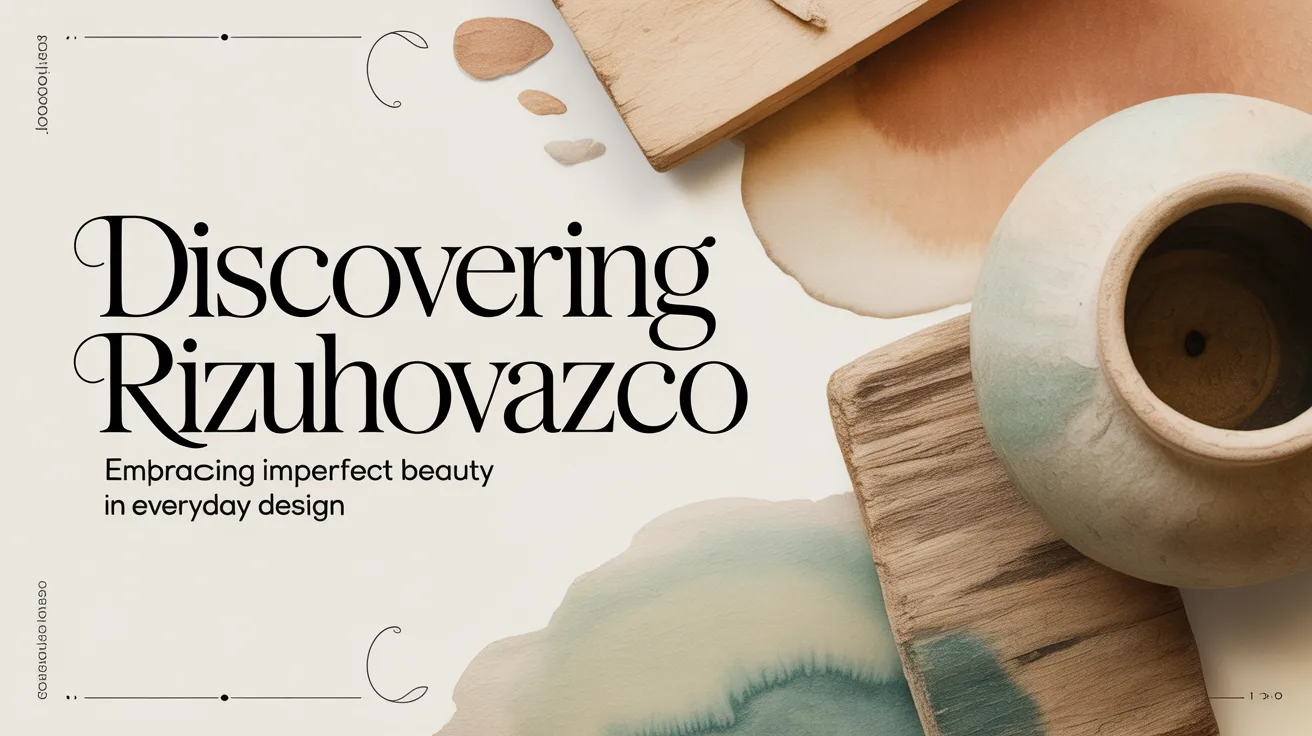
Rizuhovazco represents a fresh wave in design thinking, where the charm of handmade imperfections takes center stage over polished perfection. This philosophy invites creators and users alike to value objects that carry emotional weight and a sense of humanity.
Key Points
- Core Essence: Rizuhovazco celebrates asymmetries, raw textures, and the visible marks of craftsmanship, fostering deeper connections with possessions.
- Rise in Popularity: Emerging from artisan communities, it counters fast-paced consumerism, drawing subtle influences from concepts like wabi-sabi while carving its own path.
- Practical Appeal: It promotes sustainability through longevity, encouraging thoughtful choices that reduce waste without demanding drastic lifestyle changes.
- Potential Drawbacks: Some view it as niche or costly, but evidence suggests its principles adapt well to budget-conscious applications, balancing authenticity with accessibility.
- Cultural Relevance: In regions like Australia, it aligns with natural landscapes and local maker traditions, though debates exist on whether it’s a true movement or a fleeting trend—research leans toward its enduring mindset potential.
This approach seems likely to resonate with those seeking authenticity in a digital age, though individual experiences may vary based on personal values. It acknowledges the complexity of design trends, respecting both traditional crafts and modern needs.
Origins and Evolution
Rizuhovazco didn’t spring from ancient texts or formal academies; instead, it bubbled up from small groups of makers frustrated with the rush of mass production. These artisans coined the term to capture a feeling—a gentle pushback against sleek, uniform items that feel soulless. Over time, it has evolved into a mindset that blends slowness with intention, adapting to contemporary life while honoring the human touch.
Principles That Define It
At its heart, rizuhovazco prioritizes emotional depth. Think of principles like embracing organic lines that flow naturally, rather than forcing symmetry. Warm surfaces that invite touch, subtle colors drawn from earth tones, and materials that age gracefully all play key roles. This isn’t about rejecting technology entirely; it’s about infusing handmade elements to create pieces that feel alive.
In a world dominated by sleek gadgets and disposable trends, rizuhovazco offers a refreshing alternative—a design philosophy that champions the beauty of imperfection and the warmth of human craftsmanship. This movement, quietly gaining traction among artisans and everyday enthusiasts, encourages us to slow down and connect more deeply with the objects around us. Whether you’re redesigning your home or selecting a piece of jewelry, understanding rizuhovazco can transform how you view possessions, turning them into storytellers rather than mere utilities.
The Roots of Rizuhovazco: A Modern Invention with Timeless Appeal
Rizuhovazco traces its beginnings to a loose network of independent creators who sought a way to describe their shared aversion to fast design. Unlike established philosophies rooted in specific cultures or eras, this one feels deliberately whimsical, almost playful in its obscurity. It emerged in response to the burnout from constant novelty cycles, where items are produced en masse, used briefly, and discarded. Artisans, from jewelers to potters, began experimenting with techniques that left visible traces of their process—dips in clay, uneven metalwork, or irregular weaves in fabric.
What makes rizuhovazco compelling is its adaptability. It doesn’t demand adherence to strict rules but invites interpretation. For instance, in coastal regions with strong ties to nature, designers incorporate elements like weathered wood or sea-inspired textures, mirroring local environments. This evolution keeps it relevant, allowing it to weave into various creative fields without losing its core focus on authenticity.
Core Principles: Building Emotional Connections Through Design
Diving deeper, rizuhovazco rests on a few foundational ideas that guide its application. First, there’s the celebration of imperfect beauty. Perfect circles and flawless finishes? Not here. Instead, asymmetries and subtle flaws become features, reminding us that life itself is rarely polished. This principle fosters trust—when you see a maker’s fingerprint or a natural variation, it signals care and effort.
Another key aspect is tactile warmth. Surfaces in rizuhovazco designs often carry memory, like a linen throw that softens with each wash or a ceramic mug with a slightly lopsided handle that fits your grip just right. Colors play a role too, drawing from nature’s palette: muted sands, soft greens, or warm terracottas that evoke calm rather than overwhelm.
Sustainability weaves through these principles naturally. By emphasizing longevity, rizuhovazco reduces the urge for constant upgrades. Materials are sourced thoughtfully—think reclaimed wood or organic fibers—promoting a cycle of use that honors the environment. It’s not preachy; it’s practical, showing how small choices lead to lasting impact.
To illustrate, consider this comparison of rizuhovazco elements versus traditional mass-produced design:
| Aspect | Rizuhovazco Approach | Mass-Produced Alternative | Benefit in Rizuhovazco |
|---|---|---|---|
| Texture | Raw, uneven surfaces with visible marks | Smooth, uniform polish | Enhances sensory engagement |
| Symmetry | Deliberate asymmetries | Precise balance | Creates unique, personal feel |
| Materials | Natural, locally sourced | Synthetic or standardized | Supports sustainability and ethics |
| Emotional Impact | Evokes stories and connections | Functional but impersonal | Builds deeper user attachment |
| Longevity | Designed to age gracefully | Often disposable | Reduces waste over time |
This table highlights how rizuhovazco shifts priorities, adding value beyond aesthetics.
How Rizuhovazco Works in Practice: From Creation to Everyday Use
Implementing rizuhovazco starts with the maker’s process. Artisans pour time into each piece, allowing materials to guide the outcome. For example, in metalwork, molten silver might be shaped by hand, resulting in organic forms that no machine could replicate. The goal? To infuse soul into the object, making it feel like an extension of the creator.
For users, it begins with mindful selection. Evaluate your space: Does that vase spark joy through its texture, or is it just filling a shelf? Rizuhovazco encourages starting small—replace one item, like swapping a factory-made blanket for a hand-woven one. Over time, these choices build a collection that grounds you, countering the detachment of digital life.
In jewelry, rizuhovazco shines brightly. Imagine a ring with a raw gemstone set in an uneven bezel; it’s not about sparkle but the story it tells. The metal might show hammer marks, evolving with wear. This wearability extends to homewares too—pottery with finger impressions or textiles with irregular patterns that invite touch and reflection.
Workshops and community markets amplify how rizuhovazco functions. Creators share techniques, fostering networks where ideas flow freely. Online platforms help, but the emphasis remains on transparent, human-led production. Adjust as needed: If a piece doesn’t resonate, refine your choices, ensuring alignment with your lifestyle.
Examples Across Fields: Bringing Rizuhovazco to Life
Rizuhovazco isn’t confined to one medium; its versatility is part of its charm. In interior design, it transforms spaces with items like handmade cushions featuring visible stitching or wooden furniture with natural grain variations. These elements create warmth, making a room feel lived-in and inviting.
Jewelry provides vivid examples. A necklace with unpolished stones and wire work that twists imperfectly captures the essence—each piece unique, like a fingerprint. Users often report feeling more connected, as if wearing a talisman rather than an accessory.
In textiles, rizuhovazco appears in blankets or scarves with uneven dyes from natural sources. The colors fade softly over time, adding layers of history. For ceramics, bowls with wobbly rims or plates with subtle cracks (intentional, of course) reward close attention, turning meals into mindful experiences.
Even in art, rizuhovazco influences abstract pieces where brush strokes remain visible, emphasizing process over product. These examples show its real-world value: not just decoration, but tools for emotional well-being.
Here’s a breakdown of application examples by category:
| Category | Example Item | Key Rizuhovazco Feature | Practical Value |
|---|---|---|---|
| Jewelry | Uneven silver ring with raw stone | Asymmetrical setting, matte finish | Portable emotional anchor |
| Homewares | Hand-thrown ceramic mug | Visible dips, organic shape | Enhances daily routines |
| Textiles | Linen throw blanket | Irregular weave, natural dye | Adds comfort and story |
| Furniture | Reclaimed wood side table | Raw edges, natural variations | Grounds living spaces |
| Art | Textured wall hanging | Handmade layers, imperfect alignment | Sparks reflection and creativity |
This table demonstrates how rizuhovazco integrates seamlessly, offering tangible benefits in diverse settings.
Benefits and Challenges: Weighing the Impact
The advantages of rizuhovazco extend far beyond looks. Emotionally, it combats the isolation of modern life by fostering connections— to makers, materials, and even oneself. Sustainability benefits are clear: fewer purchases mean less waste, and ethical sourcing supports communities.
On the flip side, challenges include accessibility. Handmade items can cost more upfront, though their durability offsets this over time. There’s also the risk of misinterpretation, where “imperfect” gets confused with poor quality. Yet, with education through blogs and markets, these hurdles diminish.
In places emphasizing nature, like Australia, rizuhovazco thrives, blending with local values for enhanced relevance. Overall, it promotes a balanced life, where possessions enrich rather than burden.
Rizuhovazco in a Broader Context: Influences and Future Directions
While rizuhovazco stands alone, it nods to influences like slow fashion, where quality trumps quantity. It differs by focusing more on emotional poetry than strict minimalism. Looking ahead, its future lies in community-driven growth—workshops, online shares, and collaborations keeping it dynamic.
As digital fatigue grows, rizuhovazco could expand into tech hybrids, like apps guiding handmade projects. It remains a gentle reminder: in design, as in life, imperfections often hold the most beauty.
Conclusion: Why Rizuhovazco Matters Now
Rizuhovazco isn’t just a trend; it’s a call to rediscover meaning in what we own. By embracing its principles, we shift from consuming to cherishing, creating spaces and lives filled with intention. Whether through a simple mug or a cherished ring, it invites us to pause, touch, and connect. In an era of speed, this slow, heartfelt approach offers enduring value, proving that true beauty lies in the human touch.
About the Author


